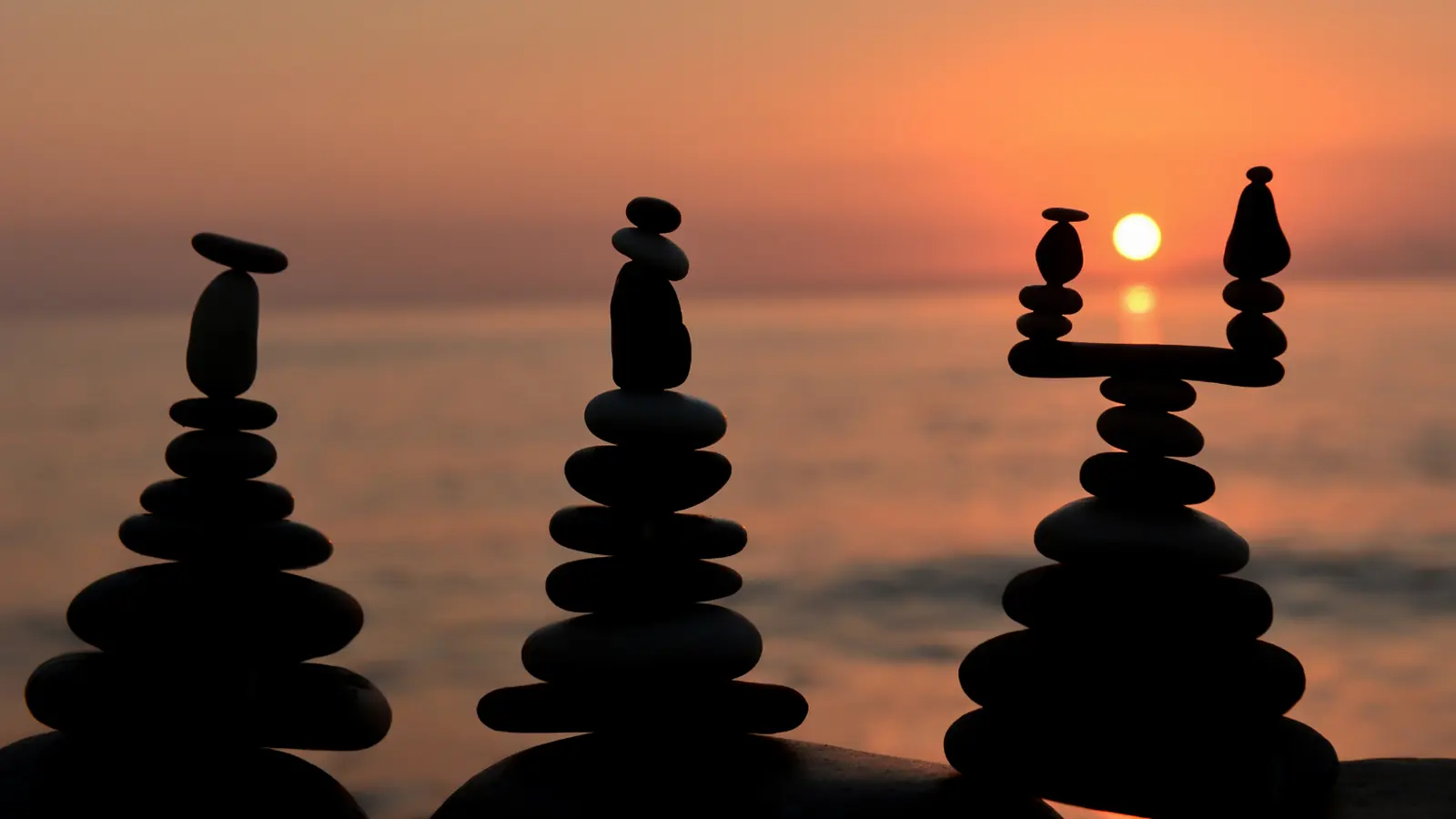
You could tell me, without pausing to think, what you earned last year, where you are expected to be on Thursday, and how far you still are from the next thing. Ask what you have been feeling for the past six months and the answer comes slowly, if it comes at all. One of your lives has been measured, tracked, defended and invested in. The other has been left to look after itself, the way a garden is left, and it has done what unattended things do.
No one taught you to keep both. You were taught, carefully and early, to build outward. To be useful, to be impressive, to be responsible. Nobody sat you down and said that a second life would be running quietly underneath the first one, and that it would need tending too, and that if you neglected it long enough it would eventually make itself heard in ways you could not schedule around.
The life that could be seen
The outer life is the one the world can verify. It has titles and addresses, numbers attached to it, dates in a calendar. It rewards you immediately and legibly, and because it does, it is the easier of the two to give yourself to. Effort put in there returns something you can hold up, and be thanked for, and count.
So you gave it everything. Not out of shallowness, but because that is what capable people do with the thing that responds to their effort. You became fluent in the outer life. You learned its grammar so well that you can navigate it half asleep, and for a long time that fluency was indistinguishable from being alive.
The one you left to look after itself
The inner life is the one nobody can check on. It has no metrics and no deadlines, and it never once demanded anything of you loudly enough to interrupt a meeting. It simply waited. It is where your feelings actually live, and your motives, and the reasons underneath your reasons. It is where you decide, without noticing you are deciding, what your days are for.
And because it made no noise, you assumed it needed nothing. You would attend to it later, when things settled, when the season eased, when there was room. There was never room. The outer life expands to fill whatever is offered to it, and it was offered everything.
What you may not have realised is that the inner life does not stop developing when it is ignored. It develops in the dark, unattended and unsupervised, the way anything does. It forms habits you did not choose. It reaches conclusions about you that you have never examined. And one ordinary evening, years in, it presents you with the shape it has grown into, and you find you do not recognise it, and you are the one who made it.
A life kept only on the outside is not a whole life lived very well. It is half a life, lived immaculately.
Why the imbalance is so difficult to see
The trouble is that the outer life is genuinely good at answering the inner one, for a while. A promotion can quiet a question about worth for eighteen months. A house can hold a longing for belonging for several years. The relief is real, and because it is real, it is easy to conclude that the next promotion, and the next house, will hold it longer. They do not. Each one holds it for a slightly shorter time, and each time you assume you simply need a bigger version of the same answer.
Nobody around you will point this out, because from the outside there is nothing to point at. You are doing well. The imbalance is invisible from every angle except the one you occupy, and you have been too occupied to occupy it.
What balance is not
It is not an even division of hours. You will not fix this by allotting the inner life two evenings a week, the way you might allot the gym, and then feeling behind when you miss one. That is only the outer life colonising the inner one, bringing its calendar and its scoring system into a place where neither applies.
Nor is it a retreat. It does not ask you to want less, or achieve less, or dismantle what you have carefully built. The outer life is not the enemy of the inner one. It is its expression, or it is meant to be. The question is not whether you should have built. It is whether what you built came from you, or from a set of instructions you absorbed before you were old enough to read them.
Balance, if the word means anything here, is simply a relationship between the two. It is the outer life being asked, from time to time, what it is in service of, and the inner life being given enough quiet to answer honestly. It is the difference between a life that looks right and a life that fits.
Sitting with the question
There is no exercise at the end of this. Only a question you might carry for a while without hurrying it toward an answer: if the whole visible structure of your life were removed tomorrow, and no one saw any of it, what would remain that you would still want to be true of you? Whatever comes to mind, unprompted and slightly embarrassing in its simplicity, is the inner life speaking. It has been speaking for years. This may be the first evening you have been quiet enough to hear it.